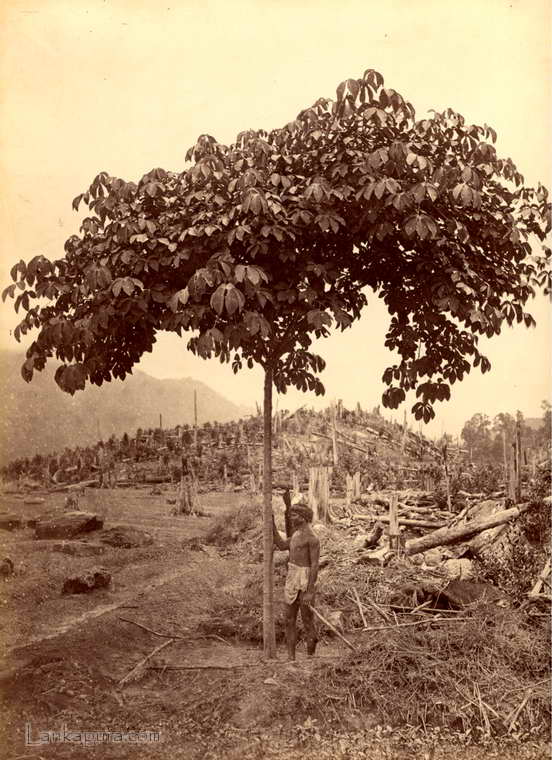
Photography By Charles Scowen & Co
The arrival of British in 1796 resulted in expelling Dutch out of the country and in 1815 the British who managed to conquer the kingdom of Kandy became the first European power that ruled the entire island.
British not only took over control of Native Sinhalese people but the change in property laws in 1832 benefited British settlers to also take over most of land ownerships from Natives. Then all the lands have been cleared and replaced with tea and coffee plantations. Coffee was the main crop and the backbone of the country economy but the epidemic during 1870s that affected the coffee crop forced the plantation owners to switch to tea. At the same time, rubber was introduced as a main crop in the island.Network of roads and railways were built to handle the economic activities following the growth of the plantation industry.
The growth of plantation industry required British to import Tamil labors from South India to substitute Sinhalese who were unwilling to work for low wages and poor living conditions. As a result of the increased Tamil migration, the hill-country Sinhalese lost their land to the newcomers and this was the beginning of the continual conflicts between Tamil and Sinhalese which leaded to occasional outbreak of violence over a long period until today.
this is the same in most british colonies. wish these effects could have been reversed after they left.
the environmental destruction
I thought the Sinhala/Tamil conflict began in the time of Duttugemunu and Elara….
At any rate, I question the wisdom of blaming the British for colonising Ceylon, or initiating ‘racial’ conflict. If it hadn’t been the British colonising us, it would have been someone else – perhaps the French, and we all know how the French treated the natives of their colonies.
The British established roads, railways and schools, and gave the island its economic foundation of rubber and tea, which are still being exporting today. More importantly, the British established English as the language of business and administration, and that gave the Ceylonese of all ethnic backgrounds access to literary, academic and economic advantages that immensely enriched our land and culture.
English is still the lingua franca of business world-wide. When it comes to our colonial heritage, we Sri Lankans have nothing at all to deplore or be ashamed of.